
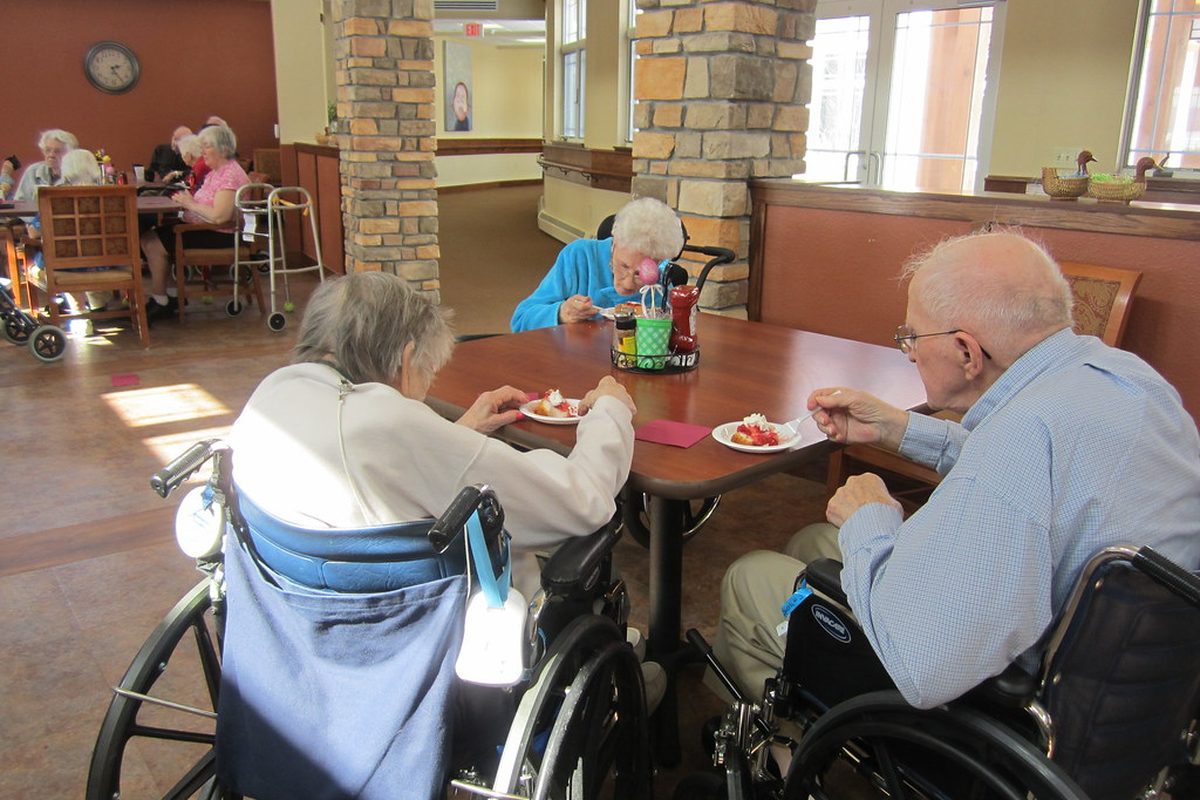

Adding a private caregiver inside assisted living makes sense when your parent needs something the community's staffing ratio cannot give: a person of her own for a meal, an afternoon, a night after a fall, or a ride to a doctor across town. The community provides the building, the meals, the nurse and a call button. A private caregiver provides one-on-one attention for a set block of hours, and the two work side by side.
Families along the Preston Road corridor and in the northern suburbs ask us about this more than almost anything else, usually with a note of guilt: we already pay for care, so why would we pay for more? The honest answer is that the community and a private caregiver are doing different jobs, and this article is about telling when the second job needs doing.
What can a community's staff not give, even a good one?
Time with one person. An assisted living aide responsible for a floor of residents is answering call buttons, passing trays, helping people to the dining room, and documenting. She is not sitting with your mother for the forty minutes it takes to finish a meal at the pace of someone with a tremor. She cannot spend the long afternoon between lunch and dinner with her, cannot walk beside her for the corridor laps physical therapy suggested, and cannot stay in the room all night because your mother is frightened after a fall.
This is not a criticism. It is arithmetic. The community's ratio is designed for the average resident on an average day, and the moments when your parent is not average are the moments a private caregiver covers:
- Meals, one-on-one. Cutting, prompting, and company, so the plate is actually eaten rather than collected.
- The long afternoon. The stretch between activities where a resident with early dementia becomes anxious, or a resident who is simply lonely goes back to bed.
- Overnight reassurance. After a fall, a hospital stay, or a change in medication, when she wakes at two and does not know where she is, and a call button is not the same as a hand.
- Escort to outside appointments. Communities transport residents on a schedule; a private caregiver takes her to the cardiologist at Texas Health Presbyterian Dallas at the time the cardiologist has, waits, takes notes, and brings her back.
- A hospital stay. Communities do not send staff to the hospital. A caregiver who already knows her can be at the bedside.
When does it make sense, and when does it not?
It makes sense when there is a specific gap with a specific shape. It does not make sense as a general upgrade in comfort, because a caregiver with no defined role in a community ends up sitting in the hallway.
| Situation | What the community provides | What the caregiver adds | Typical block |
|---|---|---|---|
| Weight loss, meals left uneaten | Tray delivered, dining room open | Sits, prompts, cuts, keeps the meal going | Lunch and dinner, several days a week |
| The first weeks after a fall or hospital stay | Nurse checks, call button | Awake presence overnight; help to the bathroom; someone there when she wakes | Overnight, for a defined stretch |
| Early dementia with afternoon anxiety | Activity calendar, group programs | One familiar person through the hard hours; a walk; a task she can still do | Afternoons |
| Frequent outside appointments | Scheduled community van | Door-to-door escort, waiting, notes for the family | Four-hour blocks around the appointment |
| Family lives far away | Periodic care conference | Weekly eyes and a phone call with detail | One or two visits a week |
| Hospital admission | Nothing at the bedside | A known face at the bedside day or night | Day, night or both |
Notice that every row has a time block attached. That is deliberate. A private caregiver in a community is bought in hours for a purpose, and the purpose is what tells you when to increase, reduce or stop.
What does the community have to approve?
Almost every community has a policy on outside caregivers, and it is worth reading before you call anyone. Typically the community will want:
- Written notice from the resident or her representative that an outside agency will provide care in the apartment
- The agency's Texas license number and a certificate of insurance
- Confirmation from the agency that the caregiver's background check was done
- Sign-in at the front desk on every visit, and a badge in some buildings
- Agreement that the caregiver works under the resident's direction and does not perform tasks the community's nurse is responsible for
The last point matters. A private caregiver in a community is a non-medical caregiver, the same as in a private home: she helps with bathing, dressing, meals, walking, transfers and company, and she reminds about medication but does not administer it. The community's nurse keeps the medication record, gives the pills, and calls the physician. Our caregivers work under a Texas Personal Assistance Services license, and the community's paperwork is routine for us. If a community has never had an outside agency in the building before, we handle the introductions.
How does the caregiver coordinate with the community's staff?
By being predictable and visible. On the first visit the caregiver introduces herself to the charge nurse and the activity director, explains what she is there for, and asks what the community would like her to know. She signs in every time. She does not undo the community's routines; she fits inside them.
The activity calendar is the first thing she reads. If there is music at two and your mother likes music, the caregiver takes her rather than sitting in the apartment. If there is a chair exercise class the physical therapist recommended, the caregiver makes sure she gets there and stays. The point of one-on-one attention is not to replace the community's life but to get your parent into it, which a resident who is anxious, slow, or embarrassed about her walker often cannot manage alone. That is what companion care looks like inside a building that already has activities.
The nurse gets a short update at the end of the visit if anything changed: less eaten, a new bruise, a bad night, a comment about pain. The family gets the same, in whatever form you have asked for, whether a text after each visit, a weekly call, or contact only when something is different. Families out of state tell us that this is the part they value most: an account of an actual afternoon rather than a care conference summary.
What does overnight reassurance after a fall actually involve?
A caregiver who stays awake in the apartment. She is there when your mother wakes, helps her to the bathroom, makes sure the walker is beside the bed, and sits with her until she settles. She does not sleep, which is the difference between a private caregiver and a family member on a cot. Communities check on residents at intervals overnight; a caregiver is there for the whole interval.
This is the same service we provide at the bedside in a hospital, and we describe it on our hospital and facility sitter services page. Families often start with overnights in the hospital after a fall, continue them for the first week or two back in the community, and then taper to afternoons or stop as confidence returns. The hospital half of that sequence works the same way: a caregiver at the bedside, awake, who then follows your parent back to the community.
Overnights are billed at the same flat hourly rate as a daytime visit, $30–34 an hour, with no night premium. The minimum visit is four hours, which for an overnight means the full night is covered rather than a piece of it.
How do you judge whether the extra hours are worth it?
Attach the hours to a result you can see, and check it after two or three weeks. Meals: is the weight steady, is the plate emptier? Afternoons: fewer calls to you at four o'clock, fewer concerns raised by the front desk, a resident who is going to music? Overnights: sleeping through, no falls, less fear? Appointments: kept, understood, followed up? If the result is there, the hours are earning their keep. If it is not, change the hours or the purpose.
A few honest signs that private care is the wrong tool:
- The need is medical. Wound care, injections, or oxygen management belong with the community's nurse or a home health agency, not a non-medical caregiver.
- The need is constant and growing, and the community's level of care no longer matches. A private caregiver can bridge that for a while, but it is a bridge, and the conversation about memory care or a different setting belongs with the community and the physician. Our article on dementia care at home versus in a facility is a fair place to start that thinking.
- The caregiver has no role. If you cannot say what the visit is for, the money is better spent on something else.
What it does well is narrow and valuable: it turns the community's average day into your mother's particular day, for the hours that matter. Many families along Preston Road find that a few afternoons a week and a driver for appointments is the whole difference between a parent who is coping and one who is thriving. Company in the afternoon is not a luxury for someone who eats alone and sleeps badly; it is often the thing that turns both around.
What are the terms, and how does it start?
The same as care in a private home. The minimum visit is four hours. There is one flat hourly rate, $30–34, day, evening, weekend or overnight. There is no long-term contract; hours go up, down, pause or stop, which suits a situation that changes as your parent recovers. Care can often start within about twenty-four hours, which matters after a fall on a Friday. A couples discount applies when one caregiver helps both parents in the same apartment.
The caregiver is matched to your parent, not chosen from a roster, and the match considers the community: someone comfortable in a building with staff, sign-in sheets and a nurse who wants a word. If the fit is wrong, you ask for a different caregiver and one is sent.
The sequence is a phone call, a free assessment in the apartment, a written care plan that names the purpose of the hours, an email to the community with our paperwork, and the first visit. We do this in communities across North Texas, and you can read more about how visits work in North Dallas, across Dallas, and in Plano and the northern suburbs, where much of the region's independent and assisted living sits. Our facility sitter services page has the practical detail of what a caregiver does inside a building that is not a private home, and our contact page is where the assessment gets booked.
This article is general information about non-medical care, not medical advice. Whether your parent's needs are still a match for her current level of care, and what her recovery allows, are questions for her physician and the community's nurse.
