


# Can I book in-home respite care in Plano for just a weekend or a week?
Yes. We book in-home respite care in Plano, Texas, for a single weekend, a week, or two weeks while you travel. There’s no long-term contract, and each visit is at least four hours. We charge $30–34 an hour for days, nights, and weekends, with major holidays billed at time and a half. Two eight-hour weekend visits run $480–544. Continuous care from Friday evening to Sunday evening runs $1,440–1,632.
Can I really book a caregiver for just one weekend?
Yes. Tell us when you’re leaving, when you’ll be back, and what you normally do for your parent during that stretch. At the free assessment, we use that routine to build a schedule. You can book afternoon visits, awake nights, or coverage for the entire time you’re away. The four-hour minimum applies to each visit.
With our respite care, we match the caregiver to the work and to your parent’s preferences. Your family meets the caregiver before care begins, and you can ask for a different caregiver at any time. Our caregivers are background-checked, insured, supervised employees. If a caregiver is sick, we send another caregiver who already has the care plan. That matters when you’re out of town and your parent is expecting help getting up in the morning.
We’re locally owned, and our Plano caregivers live in Collin County communities such as Plano, Frisco, and Carrollton, which helps keep visits reliable through rush hour. Whether you’re helping Dad in east Plano off Parker Road or checking on both parents near Willow Bend, we ask the same practical question during the assessment. Walk us through what would be hard for them to manage from the time you leave until you get back. Our page on in-home senior care in Plano names the neighborhoods and hospitals we work with.
Both parents may need help during the same visit, especially if one spouse usually does the caregiving. When one caregiver can help both people in the same home, a couples discount applies. Tell us what each person needs so we can plan the visit and explain the price. Our guide on respite for a spouse who is the caregiver covers that situation.
What does a respite weekend, a week, or two weeks cost?
Multiply the hours you book by $30–34. That flat rate applies to personal care, evenings, weekends, and awake overnights. We have no levels-of-care pricing, so the hourly rate stays the same as care needs grow. The total changes when you add or remove hours. Here’s how those estimates work out for common travel schedules.
| Weekend schedule | Hours booked | Estimated cost |
|---|---|---|
| One four-hour visit | 4 | $120–136 |
| Eight hours each on Saturday and Sunday | 16 | $480–544 |
| Two 12-hour daytime visits | 24 | $720–816 |
| Two 12-hour awake overnights | 24 | $720–816 |
| Continuous care from Friday at 6 p.m. to Sunday at 6 p.m. | 48 | $1,440–1,632 |
Two long daytime visits and two awake overnights cost the same because they use the same number of hours. Look at which parts of the day each option leaves open before deciding where to put those hours.
| Travel schedule | Hours booked | Estimated cost |
|---|---|---|
| Eight hours a day for seven days | 56 | $1,680–1,904 |
| A 12-hour awake overnight each night for seven nights | 84 | $2,520–2,856 |
| Continuous care for seven days | 168 | $5,040–5,712 |
| Continuous care for 14 days | 336 | $10,080–11,424 |
These estimates use our regular rate. Major holidays are billed at time and a half, so the hours on Thanksgiving or Christmas itself cost more. When you give us your dates, ask us to show you which hours are billed at the holiday rate.
For a mixed schedule, give us the actual departure and return times. You might need a visit before you head to the airport, an awake caregiver each night you’re gone, and a shorter visit on the day you return. We can price the hours for that schedule. See the cost of in-home care in Dallas-Fort Worth for every schedule and what changes the price.
Which schedule does my parent need while I’m gone?
Think through an ordinary day at your parent’s house. If you normally set out breakfast, help her get into the shower, or walk with her to the bathroom after dark, put those tasks on the schedule. Consider what happens between visits, too. If she would need to manage the stairs or get out of a chair alone then, tell us how she does those things when you’re home.
| If this is true at home | Schedule to discuss |
|---|---|
| Your parent manages safely overnight and needs help with bathing, meals, or getting around during the day. | Daytime visits that cover those tasks and the parts of the day when help is needed. |
| Your parent does well during the day but gets up at night and needs help reaching the bathroom or getting back to bed. | An awake overnight visit that covers the usual bedtime and morning routine. |
| Your parent needs help at unpredictable times, becomes disoriented when alone, or has a fall risk that makes time alone unsafe. | Around-the-clock coverage for the time you’re away. |
Use the table to bring examples to the assessment. “Mom calls me when she needs help getting up” tells us more if we know whether it happens in the morning, after midnight, or throughout the day.
An awake overnight caregiver can help with nighttime routines; our guide shows what an awake overnight caregiver does. A 12-hour overnight is estimated at $360–408. If your parent also needs help after the night shift ends, tell us what the morning looks like so we can cover it.
For 24-hour care, we usually schedule two or three caregivers across the week. They commonly work two 12-hour shifts per day, or sometimes three eight-hour shifts. Each caregiver stays awake and works the full shift. At each shift change, they hand off the details aloud and in writing. A written log stays in your parent’s home.
If you’re unsure about leaving gaps, start with the times you tend to check in without thinking about it. Maybe you stop by after work because Dad skips dinner or phone before bed because Mom needs a reminder to use her walker. Those little checks can shape the schedule. Our checklist, is it still safe for mom to live alone, helps you list them.
How far ahead should I book for a trip?
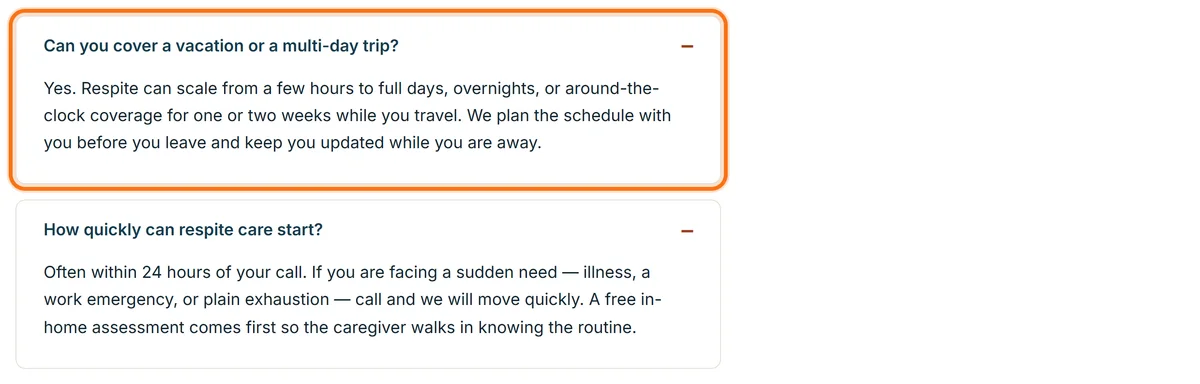
Call as soon as you know your travel dates. We can usually do the free assessment the same day or the next morning, and care can often start within 24 hours when something comes up suddenly. For a planned trip, call early enough to talk through the routine, meet the caregiver, and see how the plan works before you leave.
We suggest one or two introductory visits, each at least four hours. Use a visit to walk through a real meal, the usual trip from the bedroom to the bathroom, or the evening routine. You’ll see where your parent prefers to do things herself and where the caregiver needs to be close by. Those details are easier to settle while you’re still home. Read about what the first week of home care looks like.
Our co-owner and president, Ryan Berry, personally does the free assessments. If your parent is still in the hospital, he can do the assessment at the bedside. Hospital discharge planners and social workers across North Texas know him. Tell us if the trip is close to a discharge from Texas Health Presbyterian Hospital Plano, Medical City Plano, or Baylor Scott & White Medical Center – Plano so we can discuss the timing and the help your parent will need at home.
Call (214) 550-6533, answered 24/7, or request a free in-home assessment. Have your travel dates handy, along with the times of day you’re most concerned about.
How do I prepare the house and my parent before I leave?
Walk us through a day in your parent’s home during the assessment. A useful tour starts where your parent wakes up and follows her through meals, bathroom trips, and bedtime. Then leave the essentials in writing where the caregiver can find them.
- Write down the everyday routine. Start with wake-up time, meals, bathing, toileting, and bedtime. Add the details your parent would tell a friend helping out, such as where she likes to eat lunch or which clothes she wants laid out after a bath. Include the times she usually gets up at night and what help she accepts then.
- Leave the medication list and reminder times. Put your family’s current list with the care notes and tell us what your parent usually needs to hear at each reminder. If a nurse is scheduled to come by, include the visit and team contact in the notes so we can plan around it.
- Show us the food your parent actually eats. Point out the usual breakfast, easy lunches, and drinks she reaches for. Tell us where dishes and supplies are kept, what she may refuse, and what you usually offer instead. Mention whether she needs a drink brought to her chair or a reminder to finish it.
- Walk the paths your parent uses. In a two-story Plano home, show us the stairs, the bedroom and bathroom locations, and where the walker stays during meals and overnight. Demonstrate how she usually gets up from her favorite chair. If she uses the garage entrance, show us the keypad and explain how the door locks. Cover pet routines and the usual plan when North Texas storms interrupt an outing.
- Leave contacts and agree on when to call. Include your travel number, a local backup contact, your parent’s doctor’s number, and home health or hospice contacts when applicable. Say who can answer questions while you’re in transit and which changes you’d want to hear about right away.
- Introduce the caregiver during a familiar activity. Have them make lunch together, sit down for a favorite show, or walk to the mailbox if that’s part of the routine. Tell your parent which parts of the day the caregiver will be there and when you expect to return. Share what tends to upset her and what usually helps her settle.
What can the caregiver handle, and who handles nursing tasks?
We take over the non-medical care you normally provide during the hours you book. That can mean bathing, dressing, grooming, and toileting the way your parent is used to. We can help with walking, stairs, and transfers, make meals, prompt your parent to drink, and keep up with dishes, laundry, and linens used during care.
Companionship might be a game of cards, a favorite television show, or conversation over lunch. If an outing is in the plan, rides to the Sam Johnson Recreation Center on East Parker Road or to appointments along Coit or Preston are part of our standard service. Tell us what your parent usually enjoys and how much help she needs getting out the door.
We’re a Texas-licensed Personal Assistance Services agency, License #020448, with a non-medical scope. Our role with medication is to give reminders from your list. Medication administration, injections, wound care, and medical equipment operation are outside our scope. If a home health nurse or hospice team already visits, we work alongside them. Give us their schedule before you leave so personal care and meals can fit around their visits.
What if my parent has dementia?
We match your parent with a caregiver experienced in dementia care and put particular weight on seeing the same familiar caregiver. During the assessment, we ask what your parent eats, what upsets her, and what helps her settle. If she refuses help when she first wakes up but accepts it after coffee, that belongs in the care plan.
Arrange the introduction around a routine she knows. Let the caregiver hear how you offer help getting dressed or suggest moving from the kitchen to the living room. When you’re discussing memory care at home, tell us when your parent tends to get confused or look for you. If the trip calls for overnight or continuous coverage, go over who will be there around bedtime and what each caregiver should know at handoff.
How will I get updates, and what if my travel dates change?
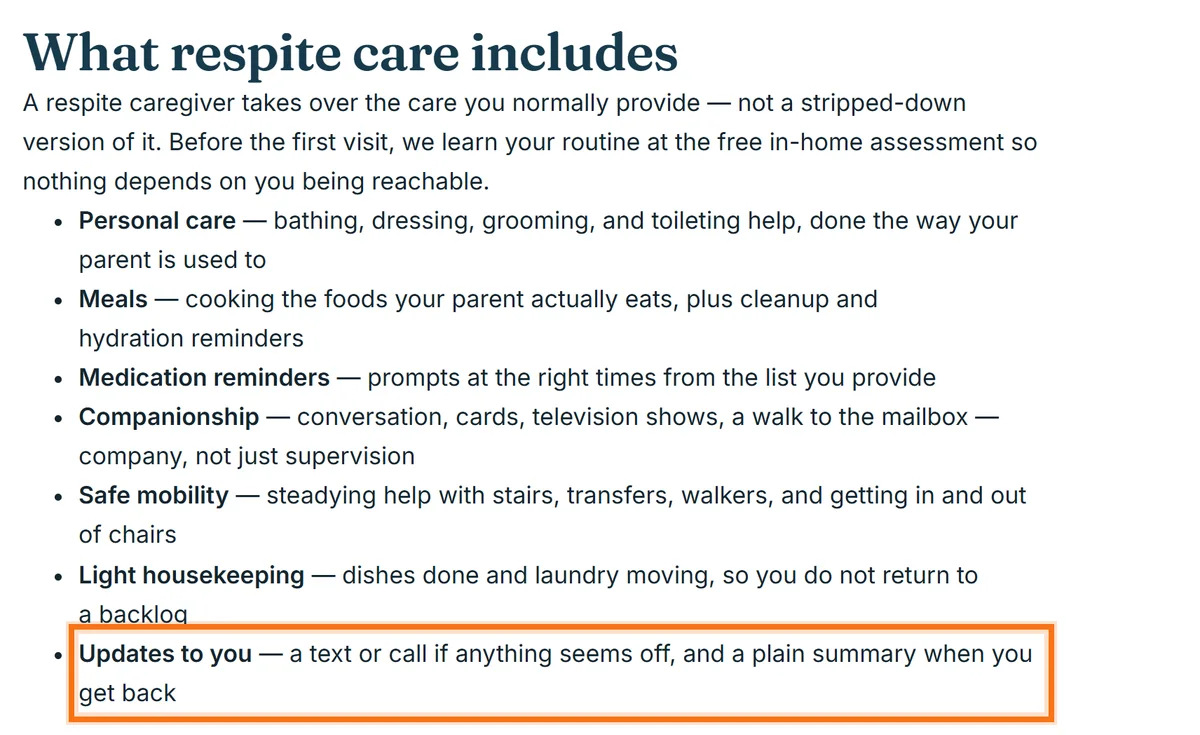
Before you leave, we agree on who should get updates and when you’d like a call. If something seems off, the caregiver can text or call. You might want us to call if Mom is unusually unsettled at bedtime or needs more help getting up than she normally does. If you’ll be hard to reach, tell us who can pick up locally and make sure their number is in the house.
During continuous care, the written log and shift handoff help the next caregiver know how your parent ate, slept, and managed her usual tasks. When you return, we give you a plain summary of how things went. It helps you pick the routine back up, especially if something changed while you were gone.
You can ask us to adjust the schedule if you need to stay longer or get home early. There’s no long-term contract. At the assessment, we’ll walk through how to request a change and what applies if you need to shorten or extend a booking. If your return moves, call as soon as you know so we can review coverage from the original end time to when you’ll actually be home.
Who pays, and what should I ask any Plano agency before booking?
Families can pay directly. If your parent has long-term care insurance, we handle the paperwork, and whether the policy pays for respite depends on its terms. Ask your insurer whether the dates and hours you’re booking qualify and what records it needs. Medicare does not pay for non-medical home care like the visits described here.
Ask each agency to talk through your actual schedule, from your departure to your return. A few questions will tell you how it handles a short booking:
- What’s the estimated total for my dates? Ask for the hours per visit, any gaps in coverage, the minimum visit, and the rate for nights, weekends, and any major holiday. Get the terms for extending or shortening the booking. Our guide to home care hour minimums explains how a visit minimum works.
- What’s your Texas license, and who will come to the house? Ask how the agency screens, insures, and supervises caregivers, whether they’re employees, and when your parent can meet the person who’ll be coming.
- Who covers a missed shift or a change of caregiver? Ask how the replacement gets the care plan, who takes calls while you’re away, and how each shift passes along information when you book continuous care.
- What help will you provide during the hours we book? Describe a real task, such as getting Dad from his chair to the bathroom after dark. Ask how the team would handle it, what falls within its scope, and how it would coordinate with a nurse already coming to the house.
If you’ve put off a trip because the details keep landing on you, start with the dates and the part of the day that worries you most. We can build the schedule from there. Call (214) 550-6533, answered 24/7, or use our contact page to request a free in-home assessment.
